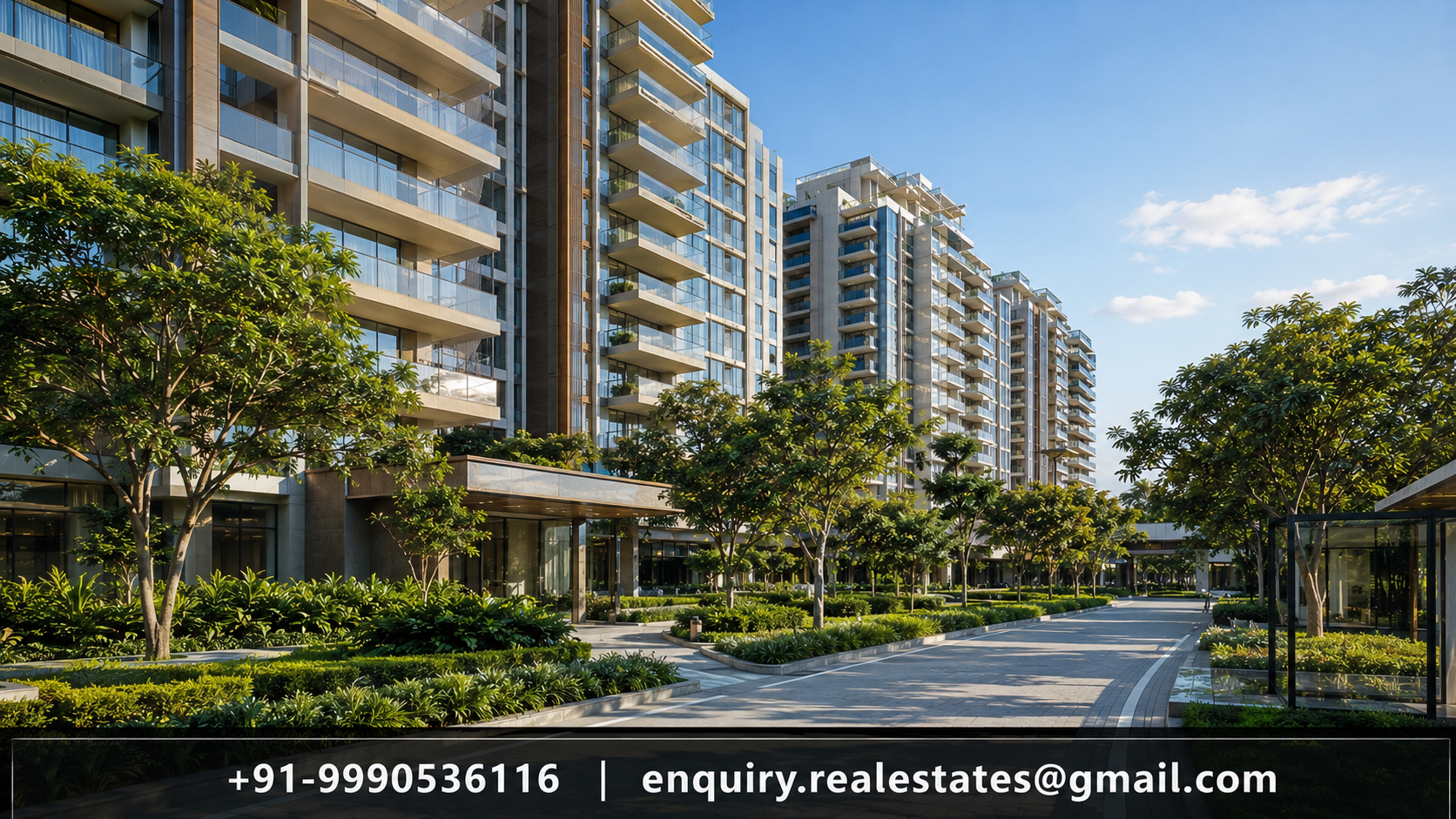
Gurugram, widely known as Gurgaon, has evolved from a satellite town into India’s premier corporate and financial powerhouse. Driving this phenomenal growth is a dynamic real estate market that continually shapes the aspirations of homebuyers, non-resident Indians (NRIs), and institutional investors. Residential price trends across Gurgaon serve as a critical barometer for the broader National Capital Region (NCR) economy, reflecting shifting buyer preferences, infrastructure milestones, and macroeconomic cycles.
Analyzing these trends requires looking beyond simple per-square-foot rates. Today's market is characterized by distinct micro-markets—ranging from the ultra-luxury corridors of Golf Course Road to the emerging high-density expanses of New Gurgaon and the fast-developing arterial networks of the Dwarka Expressway and Southern Peripheral Road (SPR). Understanding how these corridors perform involves evaluating capital appreciation, rental yields, infrastructure integration, and evolving lifestyle demands. Whether you are an end-user searching for a secure family home or an investor calibrating your portfolio for long-term growth, decoding the underlying momentum of Gurgaon real estate is essential for making informed, high-value financial decisions.
Residential prices in Gurgaon are primarily driven by rapid infrastructure development, scarcity of land in established micro-markets, and a massive shift in buyer demand toward branded, high-amenity gated communities. While core areas command premium valuations driven by established social infrastructure, emerging corridors along expressways offer higher capital appreciation potential due to upcoming commercial and transit expansions. Buyers must evaluate property status, developer credibility, and specific micro-market connectivity rather than relying on city-wide averages.
The Macro Dynamics Driving Gurgaon's Residential Price Trends
To understand current property valuations, one must examine the macroeconomic and structural pillars supporting the city’s residential sector. Gurgaon operates differently from other tier-1 Indian cities due to its heavy corporate concentration, high disposable incomes, and rapid urbanization.
Corporate Expansion and Employment Hubs
The continuous influx of Fortune 500 companies, multinational IT firms, financial institutions, and startup ecosystems into DLF CyberCity, Udyog Vihar, and Golf Course Extension commercial districts sustains a permanent demand pool for housing. Professionals working in these hubs prefer minimizing commute times, which directly underpins high property values and robust rental demand in proximity to rapid metro corridors and major expressways.
Infrastructure-Led Growth
Infrastructure remains the single biggest catalyst for price appreciation in Gurgaon. Major projects—such as the operationalization of the Dwarka Expressway, the widening of the Southern Peripheral Road (SPR), and ongoing expansions of the rapid metro network—have transformed previously peripheral agricultural land into prime residential destinations. When public transit and arterial roads improve, land values reprice rapidly, shifting buyer interest outward from saturated central zones.
Micro-Market Breakdown: Where Are Prices Heading?
Gurgaon is not a monolith; property performance varies dramatically depending on the specific micro-market. Examining these distinct corridors clarifies where price appreciation is stabilizing versus where it is accelerating.
1. Established Core Corridors (Golf Course Road & MG Road)
As land availability in central Gurgaon approaches zero, properties located along Golf Course Road operate in an exclusive tier. Secondary market supply is constrained, meaning high-net-worth individuals (HNIs) compete for limited inventory. Properties on Golf Course Road consistently command the highest per-square-foot rates in the city, backed by world-class golf greens, elite clubs, and established retail centers.
2. Emerging Arterial Corridors (Dwarka Expressway & SPR)
The Dwarka Expressway and Southern Peripheral Road represent the epicenter of current new launches and large-scale developer investments. Properties on Dwarka Expressway have experienced sharp upward price revisions as connectivity to Delhi and IGI Airport has streamlined. Buyers here are typically looking for modern architectural layouts, expansive clubhouses, and future-proof capital gains.
3. Peripheral Growth Zones (New Gurgaon & Sohna Road)
For buyers seeking balanced entry pricing without sacrificing urban connectivity, properties in New Gurgaon—encompassing Sectors 81 through 95—offer structured township living, wide internal roads, and proximity to the industrial growth engines of Manesar. Similarly, properties on Sohna Road cater to families looking for a mature neighborhood with operational schools, hospitals, and stable rental markets.
Key Factors Influencing Residential Price Trends
Evaluating whether a residential investment or purchase makes financial sense requires analyzing several foundational market variables:
-
Developer Track Record and Execution Risk: In recent years, tier-1 and listed developers have commanded significant pricing power because buyers prioritize timely delivery, superior construction quality, and transparent title deeds.
-
Apartment Configuration and Size: Post-pandemic housing preferences have fundamentally shifted. Compact 2 BHK units are popular among rental investors, but end-user demand heavily favors spacious 3 BHK and 4 BHK configurations with dedicated home-office spaces and servant quarters.
-
Gated Community Amenities: Modern buyers are willing to pay a premium for integrated societies featuring multi-tier security, Olympic-sized swimming pools, wellness centers, and expansive green open spaces.
-
RERA Compliance and Legal Clarity: Regulatory transparency under Haryana RERA has streamlined property transactions, reducing title disputes and safeguarding buyer investments against prolonged construction delays.
Investment Perspective: Capital Appreciation vs. Rental Yields
Investors analyzing Gurgaon residential properties must balance short-term capital appreciation against recurring rental income.
Capital Appreciation Dynamics
Corridors experiencing early-stage infrastructure development—such as upcoming commercial districts or newly completed transit links—generally offer higher percentage appreciation. However, they also carry higher execution risks if infrastructure projects face delays. Conversely, established sectors offer lower percentage growth but provide absolute capital safety and high liquidity.
Rental Yield Realities
Gurgaon’s residential rental yields traditionally hover between 2.5% and 3.5% per annum, which is typical for urban Indian residential markets. However, high-demand micro-markets near corporate hubs and transit stations often see higher rental traction, driven by corporate leases and expatriate executives seeking premium managed apartments.
Buyer Persona Analysis: Who is Buying in Gurgaon?
Understanding who purchases residential real estate helps clarify why specific price brackets behave the way they do:
-
The Corporate Upgrader: Professionals aged 35–50 working in senior leadership roles who are trading older builder floors or mid-segment apartments for luxury gated communities with lifestyle amenities.
-
The HNI Investor: Wealthy individuals acquiring multiple units or penthouse configurations in ultra-luxury developments as a wealth-preservation and status asset.
-
The NRI Buyer: Overseas Indians investing surplus capital into branded residences managed by institutional hospitality brands, seeking hassle-free asset management and long-term appreciation in the Indian market.
-
The First-Time Family Buyer: Families utilizing dual-income stability to secure permanent housing in New Gurgaon or arterial corridors, prioritizing children's education infrastructure and community security.
Advantages and Potential Limitations of Gurgaon Real Estate
Advantages
-
High-Growth Economic Ecosystem: Continuous employment generation supports strong, fundamental housing demand.
-
World-Class Infrastructure: Rapid expansion of expressways, underpasses, and metro lines continuously enhances urban mobility.
-
Institutional Developer Presence: Dominance by professional, listed real estate developers ensures higher construction standards and transparent governance.
Potential Limitations
-
Cyclical Volatility: Speculative momentum in certain micro-markets can occasionally lead to short-term overpricing.
-
Environmental and Civic Challenges: Issues related to groundwater management, power backup dependency, and seasonal urban flooding require careful project-level evaluation.
-
High Entry Thresholds: Prime micro-markets require substantial capital outlays, pricing out mid-income buyers from central sectors.
Practical Buyer and Investor Checklist
Before committing capital to any residential asset in Gurgaon, review this practical evaluation framework:
-
Verify RERA Registration: Check the official Haryana RERA portal to confirm project approvals, promised delivery timelines, and land titles.
-
Inspect Actual vs. Promised Infrastructure: Verify operational status of arterial roads, water supply lines, and power grids rather than relying solely on future projections.
-
Evaluate Developer Delivery History: Review the builder's past project completions, construction quality, and maintenance standards.
-
Calculate Total Acquisition Cost: Factor in GST, stamp duty, registration charges, preferential location charges (PLC), and advance maintenance deposits.
-
Analyze Exit Liquidity: Consider how easily the property can be resold or rented out if personal or financial circumstances change.
Understanding residential price trends across Gurgaon reveals a maturing, highly stratified property market where location, infrastructure connectivity, and developer pedigree dictate long-term success. While micro-markets present distinct risk-reward profiles, the overarching trajectory of the city remains tied to its robust economic foundation and continuous infrastructural expansion. By prioritizing verified projects, aligning purchases with genuine utility or calculated investment horizons, and navigating the market with clear strategic intent, buyers can secure high-value assets in one of India's most dynamic urban landscapes.
Frequently Asked Questions
What are the main drivers of residential property prices in Gurgaon?
Residential prices in Gurgaon are primarily driven by continuous corporate job creation, rapid expansion of expressways and transit networks, scarcity of land in central locations, and rising demand for branded, amenity-rich gated communities.
Is Gurgaon a good place for long-term real estate investment?
Yes, Gurgaon remains one of India's top institutional real estate markets due to its strong corporate backing, high disposable incomes, and continuous infrastructure upgrades. Long-term success depends heavily on selecting the right micro-market and verified builder.
Which micro-markets in Gurgaon offer the highest capital appreciation?
Emerging corridors with massive infrastructure investments—such as the Dwarka Expressway and parts of the Southern Peripheral Road—historically offer higher capital appreciation potential compared to fully saturated central locations.
What is the typical rental yield for residential properties in Gurgaon?
Residential rental yields in Gurgaon generally range between 2.5% and 3.5% annually. Properties located close to major commercial hubs and rapid transit stations often command higher rental demand and better yields.
How do I verify the legal status of a residential project in Gurgaon?
You can verify a project's legal and structural status by checking its registration details on the official Haryana RERA website, reviewing title deeds with a legal expert, and confirming local municipal approvals.
Are ready-to-move flats better than under-construction properties?
Ready-to-move flats eliminate construction delay risks and allow immediate occupancy or rental income generation, whereas under-construction properties often offer lower entry prices and structured payment plans over time.
How important is developer reputation when buying property in Gurgaon?
Developer reputation is critical in Gurgaon. Tier-1 and listed builders typically ensure timely possession, higher construction standards, transparent paperwork, and better long-term society maintenance.
What hidden costs should I expect when purchasing a home in Gurgaon?
Beyond the base agreement value, buyers must budget for government stamp duty, registration fees, GST (where applicable), preferential location charges (PLC), parking allocation fees, and advance maintenance deposits.
Navigating Gurgaon's dynamic residential market requires precise data, transparent guidance, and access to verified properties. Whether you are searching for your dream home or a high-yield investment asset, explore our curated selection of Gurgaon residential properties to find options tailored to your exact requirements.