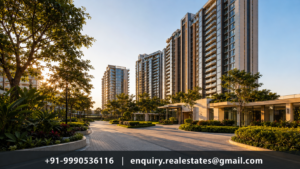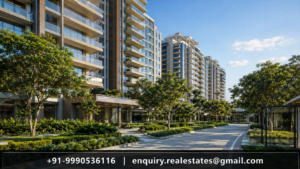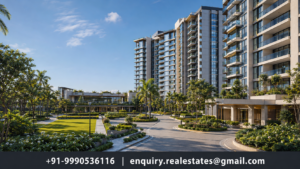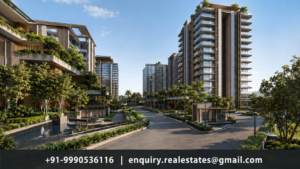
Over the past ten years, the urban landscape of the Millennium City has undergone a seismic shift, transitioning from a collection of sprawling, disconnected sectors into a heavily structured, premium-driven mega-city. Gurgaon residential property has transitioned from being viewed primarily as a speculative investment vehicle for high-net-worth individuals to a mature, end-user-driven market dominated by institutional developers, branded residences, and integrated township living. For buyers, investors, and industry analysts, understanding this decade-long evolution is essential for making informed decisions in today’s market. This comprehensive analysis explores the driving forces, infrastructural milestones, shifting consumer preferences, and future trajectories that define the residential sector in Gurgaon today.
Over the last decade, the Gurgaon residential market has evolved from speculative, fragmented land-bank plays into a mature, organized ecosystem dominated by high-end gated communities, branded developers, and luxury high-rises. Key drivers include massive infrastructure expansion along corridors like the Dwarka Expressway and Golf Course Extension Road, a structural shift toward organized luxury housing, and strong institutional backing. While entry prices have risen significantly, liquidity, rental yields, and build quality have also matured, turning Gurgaon into one of India’s most resilient prime real estate markets.
The Decade in Review For Gurgaon Residential Property From Speculation to Institutional Maturity
A decade ago, the Gurgaon property market was characterized by raw land speculation, under-funded local developers, and patchy infrastructure. Many investors purchased plots or under-construction units in distant corridors with the expectation of short-term capital gains, often resulting in stalled projects and delayed possessions when market liquidity tightened.
Today, the market reflects institutional maturity. Regulatory frameworks like RERA (Real Estate Regulatory Authority) and stricter financial compliance have weeded out unorganized players, leaving top-tier developers with robust balance sheets and execution track records. Buyers now demand ready-to-move flats in Gurgaon or projects backed by trusted Tier-1 builders. The emphasis has shifted decisively from paper appreciation to tangible lifestyle value, timely delivery, and superior construction standards.
Infrastructure Expansion as the Primary Catalyst
Infrastructure has been the single biggest catalyst reshaping the Gurgaon residential property landscape over the last ten years. As central areas like Golf Course Road reached near-saturation, urban expansion forced development outward along major arterial corridors.
The Rise of New Corridors
- Golf Course Extension Road: Evolved from a dusty peripheral road into a premium micro-market featuring luxury high-rises, Grade-A retail, and seamless connectivity to South Delhi.
- Dwarka Expressway: Transformed from a long-delayed concept into a world-class infrastructure corridor, altering the supply dynamics of properties on Dwarka Expressway and bridging the gap between Delhi and Gurgaon.
- New Gurgaon (Sectors 81 to 95): Emerged as a thriving hub for mid-segment and upper-mid-segment housing, catering to the growing workforce in the Manesar and IMT industrial belts via properties in New Gurgaon.
- Sohna Road and Southern Peripheral Road (SPR): Evolved to accommodate mixed-use townships, integrated commercial spaces, and high-density residential clusters.
Shifting Consumer Preferences: Size, Luxury, and Wellness
Buyer psychology has experienced a profound transformation over the past decade. Ten years ago, compact 2 BHK configurations were the staple of volume sales. Today, post-pandemic lifestyle shifts, rising disposable incomes, and the aspirations of corporate professionals and NRIs have rewritten demand patterns.
Key Shifts in Consumer Demand
- Preference for Larger Homes: 3 BHK and 4 BHK configurations, along with spacious penthouses and independent floor concepts, now dominate new launches.
- Integrated Townships: Buyers increasingly reject isolated standalone towers in favor of gated communities offering open green spaces, clubhouses, sports facilities, and walk-to-work or walk-to-school convenience.
- Health and Wellness Infrastructure: Air filtration systems, biophilic architecture, jogging tracks, and wellness centers have transitioned from luxury add-ons to core hygiene factors for modern homebuyers.
The Institutionalization of Supply: Rise of Branded Developers
Ten years ago, local regional developers held significant market share. Today, the Gurgaon residential market is heavily consolidated among elite national and regional developers—such as DLF, M3M, Emaar, Godrej, Central Park, and Sobha—who command dominant market share.
This consolidation has brought several benefits to buyers:
- Guaranteed Quality: Standardized construction techniques, advanced pre-cast technologies, and superior architectural finishes.
- Professional Facility Management: Long-term asset maintenance through institutional property management firms.
- Financial Transparency: Transparent payment plans, escrow account tracking, and compliance with legal mandates.
Evolution of Rental Markets and Yield Dynamics
The maturation of the residential market has directly impacted rental yields and tenant expectations across Gurgaon. While rental yields historically hovered around 2% to 3%, the influx of high-salaried corporate executives, startup founders, and multinational leadership teams has driven demand for managed, high-end rental properties.
Properties located near major employment hubs—such as Cyber City, Udyog Vihar, and Golf Course Road—command premium rentals. Investors examining residential projects in Gurgaon now evaluate properties not just on capital appreciation potential, but on their ability to attract stable, high-quality corporate tenants seeking modern amenities and robust security.
Comparison: Gurgaon Residential Market (Then vs. Now)
| Parameter | Decade Ago (Circa 2016) | Current Market (2026) |
|---|---|---|
| Market Driver | Speculative investing and land banking | End-user demand, institutional capital, and luxury living |
| Dominant Developers | Fragmented local builders and regional players | Consolidated Tier-1 national developers and branded groups |
| Key Infrastructure | Developing arterial roads, limited rapid transit | Operational Rapid Metro, Dwarka Expressway, cloverleaf flyovers, expanded underpasses |
| Preferred Configurations | Compact 2 BHKs and affordable housing units | Spacious 3 BHK, 4 BHK luxury residences, and branded serviced apartments |
| Regulatory Framework | Pre-RERA environment with frequent project delays | Strict RERA enforcement, timely execution, and financial transparency |
Investor Perspectives: Risk, Holding Period, and Liquidity
Investing in Gurgaon real estate requires a different playbook compared to a decade ago. Speculative flipping has been replaced by structured, long-term capital allocation.
- Entry Pricing: Capital values across prime micro-markets have appreciated substantially, raising entry barriers for retail investors.
- Liquidity: Secondary market liquidity is highest in established corridors with fully developed social infrastructure. Unverified or peripheral projects still face liquidity friction.
- Holding Period: A realistic investment horizon of 5 to 7 years is recommended to capture meaningful capital appreciation and ride out market cycles.
Pros and Potential Limitations of the Modern Gurgaon Market
Advantages
- World-class commercial infrastructure and high-income employment hubs.
- Robust selection of luxury and ultra-luxury branded residences.
- Exceptional connectivity via expressways, metro networks, and proximity to IGI Airport.
- Transparent regulatory environment governed by RERA.
Potential Limitations
- High entry thresholds and ticket sizes in prime micro-markets.
- Environmental and civic challenges during peak monsoon or construction seasons.
- Traffic congestion at key bottlenecks during peak commuting hours.
Practical Buyer Checklist for Navigating Today’s Market
Before committing capital to any residential asset in Gurgaon, buyers and investors should follow a rigorous due diligence framework:
- [ ] Verify RERA Registration: Confirm the project’s legal status and delivery timelines on the official Haryana RERA portal.
- [ ] Inspect Developer Track Record: Review past completed projects, construction quality, and maintenance standards of the builder.
- [ ] Evaluate Infrastructure Access: Assess actual commuting times to key employment hubs, airports, schools, and hospitals.
- [ ] Analyze Total Cost of Ownership: Factor in GST, stamp duty, registration charges, preferential location charges (PLC), and long-term maintenance deposits.
- [ ] Consult Financial and Legal Experts: Engage independent legal counsel to review allotment letters and buyer-developer agreements.
The evolution of the Gurgaon residential market over the past decade represents a maturation from speculative chaos to institutionalized excellence. For homebuyers and discerning investors, the market offers unmatched lifestyle amenities, superior infrastructure, and strong wealth-preservation characteristics—provided decisions are rooted in thorough research and project due diligence.
Frequently Asked Questions
What are the primary drivers of growth in the Gurgaon residential market over the last decade?
Growth has been driven by rapid infrastructure expansion (such as the Dwarka Expressway and Golf Course Extension Road), the consolidation of top-tier branded developers, rising corporate employment, and a structural shift toward luxury integrated township living.
Is Gurgaon property still a good investment for long-term buyers?
Yes, Gurgaon remains one of India’s premier real estate destinations due to its robust economic foundation, high-income corporate demographic, and continuous infrastructure upgrades. However, success depends heavily on selecting the right micro-market, developer, and entry price point.
Which micro-markets have seen the most significant development in the past ten years?
The Golf Course Extension Road, Dwarka Expressway, and New Gurgaon corridors have experienced the most explosive transformation, evolving from barren stretches into self-sustained residential and commercial hubs.
How has RERA changed buying conditions in Gurgaon?
RERA has brought transparency, accountability, and legal recourse to buyers, significantly reducing project delays and ensuring that developers maintain escrow accounts exclusively for construction expenses.
What configurations are currently in highest demand among homebuyers?
Spacious 3 BHK and 4 BHK luxury apartments, penthouses, and gated independent builder floors are currently the most sought-after configurations among end-users and upgraders.
How do rental yields in Gurgaon compare to historical averages?
While historical yields were low (around 2% to 3%), rising corporate demand for premium, managed gated communities has pushed rental returns higher in prime micro-markets near business districts.
Are ready-to-move properties safer than under-construction projects?
Ready-to-move properties eliminate construction risk and delivery delays, making them ideal for end-users. However, trusted Tier-1 developers offer robust construction-linked payment plans that make modern under-construction projects attractive as well.
How important is developer reputation when buying in Gurgaon?
Developer reputation is paramount. Tier-1 developers offer better construction quality, timely delivery, superior facility management, and higher resale liquidity compared to unorganized local builders.
What is the ideal holding period for real estate investments in Gurgaon?
A holding period of 5 to 7 years is generally recommended to navigate market cycles, benefit from infrastructure maturation, and achieve optimal capital appreciation.
How can I get professional assistance for buying residential property in Gurgaon?
For expert guidance, verified project shortlisting, and personalized advisory services, you can explore available options or contact our advisory team directly.