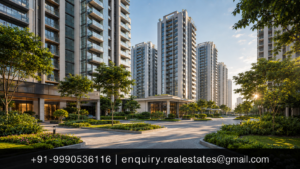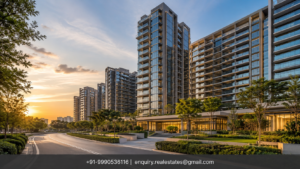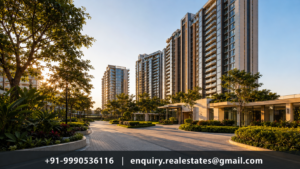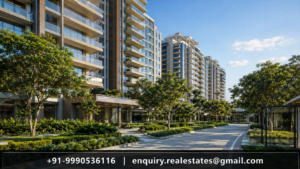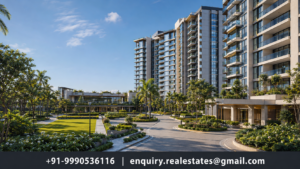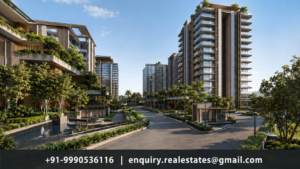
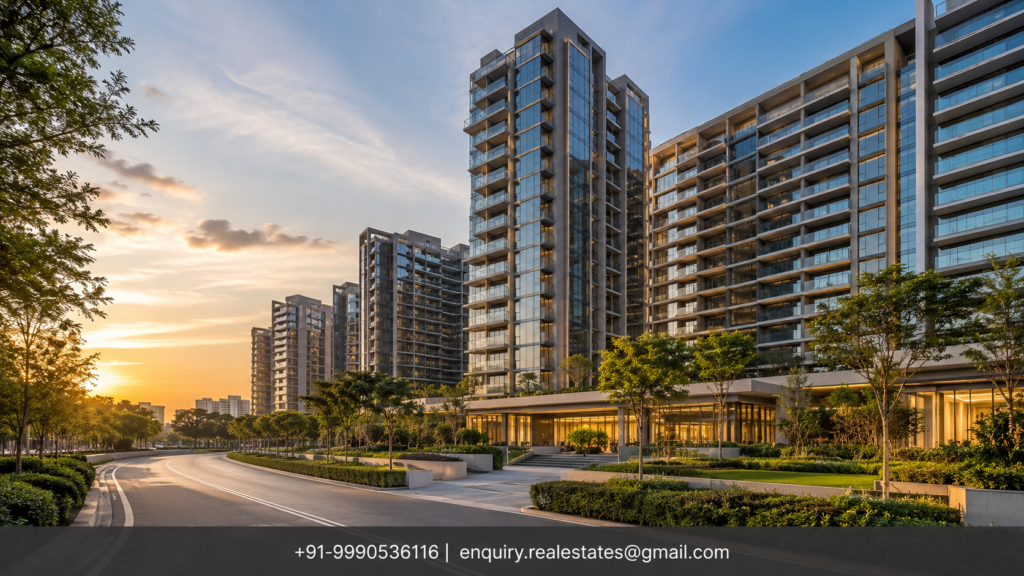
The transformation of Gurugram from a satellite manufacturing and agricultural hub into one of India’s most prominent financial and corporate powerhouses is a textbook study in urban evolution. Over the past two decades, the city’s growth narrative has been fundamentally driven by Gurgaon Infrastructure Boom. Today, a new wave of massive capital investments—spanning expansive expressways, rapid mass transit expansions, multi-modal transport hubs, and strategic commercial nodes—is redefining the real estate landscape. residential properties in Gurgaon are no longer evaluated merely by their immediate proximity to legacy commercial districts like Cyber City. Instead, buyers and investors are analyzing how modern infrastructure corridors are unlocking previously underutilized land banks, shifting micro-market dynamics, and elevating the standards of urban living.
For homebuyers, modern families, and long-term investors navigating this fast-paced market, understanding the nexus between infrastructure and residential value creation is paramount. This article explores the multifaceted impact of the infrastructure boom on Gurgaon residential properties, examining major transport corridors, shifting buyer preferences, evolving property configurations, and critical considerations for anyone looking to invest in the region.
The infrastructure boom in Gurgaon is reshaping residential real estate by decentralizing housing demand, opening up high-growth corridors like the Dwarka Expressway, Southern Peripheral Road (SPR), and New Gurgaon, and shifting preferences toward integrated townships with robust social infrastructure. This expansion bridges the gap between commercial growth and modern residential living, creating balanced micro-markets with strong long-term capital appreciation and rental yield potential.
The Evolution of Urban Grid Resulting In Gurgaon Infrastructure Boom
Urban expansion in Gurugram has historically mirrored the rollout of major arterial roads and expressways. In the early phases of urban planning, growth was heavily concentrated along the Mehrauli-Gurgaon (MG) Road, old Delhi-Gurgaon Road, and subsequently the iconic Golf Course Road. These early corridors proved that infrastructure acts as the primary catalyst for land value appreciation and residential demand.
As these legacy areas approached saturation, traffic congestion, escalating land acquisition costs, and limited fresh supply compelled urban planners, developers, and buyers to look outward. The subsequent master plans laid the groundwork for a multi-nodal city structure. Today, infrastructure development is no longer reactive; it is proactive, setting the stage for organized residential clusters long before commercial occupancy peaks.
Key Drivers of Modern Infrastructure Growth
-
Arterial Expressways and Peripheral Roads: Projects like the Dwarka Expressway, Southern Peripheral Road (SPR), and the widening of Sohna Road have dramatically improved intra-city transit and connectivity with New Delhi and the Indira Gandhi International (IGI) Airport.
-
Expansion of Mass Transit: The extension of the rapid metro and Delhi Metro networks, alongside planned multi-modal transport hubs, continues to bridge geographic divides.
-
Utility and Civic Upgrades: Investments in stormwater drainage systems, underground cabling, water treatment plants, and smart city grid integrations directly influence the liveability scores of modern residential sectors.
-
Commercial Decentralization: The proliferation of corporate parks, high-street commercial developments (SCOs), and institutional zones across peripheral sectors ensures that housing demand remains anchored to employment hubs.
Key Infrastructure Corridors Driving Residential Demand
The ongoing infrastructure boom is not uniform across the city; it is concentrated along specific high-potential corridors. Each corridor offers unique characteristics, driving distinct segments of Gurgaon residential properties.
1. The Dwarka Expressway Corridor
The Dwarka Expressway stands out as one of the most prominent infrastructure catalysts in the National Capital Region (NCR). Designed to alleviate traffic congestion on the National Highway-48 (NH-48), this multi-lane highway connects Dwarka in New Delhi with Kherki Daula in Gurgaon, intersecting several developing sectors.
-
Real Estate Impact: The corridor has witnessed a massive influx of ultra-luxury, luxury, and high-end group housing projects by tier-1 developers.
-
Buyer Profile: Attracts high-net-worth individuals (HNIs), senior corporate professionals, and investors looking for modern architectural designs, expansive clubhouses, and superior connectivity to the national capital and the airport.
-
Explore Options: For those evaluating this axis, review current developments through properties on Dwarka Expressway.
2. Southern Peripheral Road (SPR) and Golf Course Extension
Connecting the Golf Course Extension Road to NH-48 near Kherki Daula, the SPR acts as a vital southern bypass. The rapid development of commercial office spaces along this stretch has converted it into a prime residential zone.
-
Real Estate Impact: Seamless integration with the Delhi-Mumbai Expressway network has elevated SPR’s status. The area features a mix of high-rise gated communities, plotted developments, and integrated townships.
-
Buyer Profile: End-users working in nearby business parks and investors seeking robust rental demand driven by corporate migration.
3. New Gurgaon and Sector-Specific Growth
Encompassing sectors beyond the Kherki Daula toll, properties in New Gurgaon—such as sectors 81 through 95—have transformed from peripheral tracts into self-sustaining residential ecosystems.
-
Real Estate Impact: Excellent connectivity via the Pataudi Road, Dwarka Expressway, and NH-48, combined with more accessible entry price points compared to central Gurgaon, has fueled high absorption rates.
-
Buyer Profile: First-time homebuyers, young families, and mid-level management professionals seeking spacious configurations within gated societies equipped with modern social infrastructure.
-
Explore Options: Discover structured residential layouts and community living standards via properties in New Gurgaon.
4. Legacy Corridors: Golf Course Road and Sohna Road
While newer corridors grab headlines, established legacy roads continue to command elite valuations due to operational social infrastructure and scarce new supply.
-
Golf Course Road: Epitomizes ultra-luxury living with rapid metro connectivity, premium golf-facing developments, and established commercial hubs. Explore premium options via properties on Golf Course Road.
-
Sohna Road: Serves as a vital arterial link to South Gurgaon (Sohna), offering a blend of affordable, mid-segment, and high-end residential projects backed by educational institutions and retail centers. Review available choices through properties on Sohna Road.
Changing Preferences in Residential Configurations
As the infrastructure landscape matures, the expectations of homebuyers have undergone a structural shift. The post-pandemic emphasis on health, wellness, home-office integration, and community living has permanently altered architectural and design choices across Gurgaon residential properties.
Shift Toward Larger Configurations and Gated Communities
While 2 BHK units historically dominated entry-level demand, the infrastructure boom and the rise of affluent nuclear families have shifted preference toward spacious 3 BHK and 4 BHK apartments, independent floors, and luxury penthouses. Buyers increasingly prioritize functional balconies, dedicated work-from-home dens, multi-tier security, and expansive green open spaces within gated complexes.
The Rise of Integrated Townships
Infrastructure-driven corridors favor master-planned townships where residential units, schools, healthcare facilities, and retail high-streets coexist. This self-contained urban model minimizes daily commute times, insulating residents from external traffic bottlenecks and elevating overall quality of life.
Market Dynamics: Supply, Demand, and Investment Outlook
Evaluating real estate in an infrastructure-driven market requires a clear-eyed analysis of demand-supply metrics, holding periods, and liquidity risks.
Capital Appreciation vs. Rental Yields
-
Capital Appreciation: Infrastructure projects follow a predictable appreciation lifecycle—noticing initial surges during project announcement, land acquisition, and groundbreaking, followed by a maturation phase upon physical completion and occupancy. Investors entering emerging corridors typically target medium- to long-term capital gains.
-
Rental Yields: Mature corridors with established commercial spaces (such as Golf Course Road and parts of SPR) offer stable rental yields, driven by continuous corporate leasing demand. Emerging corridors exhibit lower initial rental yields that scale up progressively as social infrastructure (schools, hospitals, retail) catches up with residential occupancy.
Comparison Table: Gurgaon Infrastructure Corridors
| Corridor | Primary Infrastructure Catalyst | Dominant Property Types | Target Buyer Profile | Investment Horizon |
| Dwarka Expressway | Multi-lane highway, cloverleaf interchanges, near IGI Airport | Ultra-luxury high-rises, branded residences | HNIs, senior executives, investors | Medium to Long-Term |
| Southern Peripheral Road (SPR) | Connecting link to Delhi-Mumbai Expressway, commercial hubs | Luxury apartments, integrated townships | Corporate professionals, end-users | Medium-Term |
| New Gurgaon | Pataudi Road expansion, proximity to NH-48 and Dwarka Expressway | Mid-to-high segment group housing, plotted developments | First-time buyers, young families | Long-Term |
| Golf Course Road | Rapid Metro, established urban arterial roads | Ultra-luxury condominiums, premium high-rises | Wealthy end-users, legacy investors | Short to Medium-Term |
Practical Buyer and Investor Considerations
Navigating Gurgaon’s real estate market amid rapid infrastructure expansion requires diligent due diligence. Buyers and investors must evaluate projects through a multi-dimensional framework:
-
Verify RERA Compliance: Ensure the project and developer are fully registered under the Haryana Real Estate Regulatory Authority (HRERA) to protect against construction delays or legal disputes.
-
Inspect Ground-Level Infrastructure: Do not rely solely on master plan blueprints. Verify the actual status of connecting roads, sewage lines, power supply reliability, and water availability.
-
Evaluate Developer Track Record: Prioritize developers with a proven delivery record, robust financial stability, and transparent construction timelines.
-
Assess Exit Liquidity: Consider how easily the property can be resold or rented out based on current and projected demand in that specific micro-market.
-
Calculate Total Acquisition Cost: Factor in registration charges, GST (where applicable), maintenance deposits, preferential location charges (PLC), and clubhouse fees alongside the basic sale price.
Pros and Potential Limitations
Advantages
-
Enhanced Connectivity: Reduced commute times to Delhi, corporate hubs, and the international airport.
-
Infrastructure-led Appreciation: Higher probability of capital growth driven by civic and transit enhancements.
-
Modern Amenities: Access to world-class clubhouses, sports facilities, wellness centers, and smart-city security systems.
-
Diverse Options: A wide spectrum of choices ranging from mid-segment apartments to ultra-luxury branded residences.
Potential Limitations
-
Execution Delays: Public infrastructure projects can occasionally face delays, temporarily impacting accessibility and liveability.
-
Price Escalation: Prime infrastructure corridors often command premium valuations, raising entry barriers for retail investors.
-
Construction Dust and Congestion: Micro-markets experiencing active infrastructure rollout may face temporary environmental and traffic inconveniences.
Buying Checklist
-
[ ] Verify RERA registration and project approvals.
-
[ ] Inspect physical connectivity and approach roads.
-
[ ] Review developer past delivery history and construction quality.
-
[ ] Check availability of social infrastructure (schools, hospitals, convenience retail).
-
[ ] Clarify all hidden costs, including maintenance, GST, and PLC.
-
[ ] Consult a qualified legal expert to review property allotment and agreement documents.
The ongoing infrastructure boom in Gurugram is far more than a series of road expansions—it is a fundamental restructuring of how the city lives, works, and grows. By opening up new corridors, improving transit efficiency, and fostering self-sustaining micro-markets, infrastructure investments have diversified the choices available in Gurgaon residential property.
Whether you are an end-user seeking a modern, well-connected family home or an investor looking to capture long-term appreciation across emerging growth zones, aligning your property choice with verified infrastructure milestones is the smartest path forward. To explore curated residential options tailored to your specific budget and lifestyle requirements, explore ready-to-move apartments in Gurgaon.
For personalized assistance, property shortlisting, or expert advisory services:
Frequently Asked Questions
1. How does infrastructure development impact property prices in Gurgaon?
Infrastructure development directly enhances accessibility, reduces travel times, and signals future commercial viability. This typically triggers capital appreciation across adjacent residential micro-markets, moving through phases from initial announcement to physical completion and full occupancy.
2. Which corridors in Gurgaon are experiencing the highest infrastructure-led growth?
The Dwarka Expressway, Southern Peripheral Road (SPR), New Gurgaon sectors, and the Golf Course Extension Road are currently the primary epicentres of infrastructure-led residential and commercial expansion.
3. Are ready-to-move-in properties better than under-construction projects in Gurgaon?
Ready-to-move-in properties eliminate construction delay risks and GST liabilities, offering immediate occupancy or rental income. However, under-construction properties in emerging infrastructure corridors often offer lower entry price points and higher potential for capital appreciation upon completion.
4. Is New Gurgaon a good location for end-users and investors?
New Gurgaon offers balanced pricing, excellent connectivity via major expressways, and well-planned community layouts, making it highly suitable for end-users seeking spacious housing and long-term investors targeting steady capital growth.
5. What factors should I check before buying property in an upcoming Gurgaon sector?
Key factors include verified RERA registration, actual physical progress of connecting roads and utilities, developer credibility, proximity to employment hubs, and the availability of essential social infrastructure such as schools and healthcare centers.
6. How do I verify RERA details for a residential project in Gurgaon?
You can verify RERA registration details, project approvals, and promoter backgrounds directly through the official Haryana RERA (HRERA) portal online before committing financial funds.
7. What configuration is currently in highest demand across Gurgaon?
Spacious 3 BHK apartments and independent floor configurations are currently experiencing the highest demand, driven by nuclear families and remote/hybrid working professionals seeking dedicated home office spaces.
8. How can I get professional help finding the right property in Gurgaon?
You can connect directly with experienced property advisors for personalized shortlisting and market insights.